


Five Steps to Effectively Implement a Fall Prevention Program

Updated: Aug 11
A fall prevention program can fit naturally into the workflow of a podiatry practice. By involving both front-office staff and providers, your team can identify at-risk patients, introduce helpful resources, complete an assessment, and recommend appropriate next steps.
1. Stock Fall Prevention Materials
Place the Fall Prevention Program brochure in your waiting area, near new-patient seating, at the front desk, and in each exam room.

Keeping materials visible and easy to access helps raise awareness and allows staff to quickly provide information when they identify a patient who may benefit from the program.
2. Identify Patients Who May Be at Risk

Train staff to watch for common signs of fall risk, including patients who:
Are age 65 or older
Use a cane, walker, or other mobility aid
Have difficulty rising from a seated position
Demonstrate an unsteady or shuffling gait
Rely on a caregiver or family member for mobility assistance
Report a recent fall or near-fall
Staff members are not expected to diagnose fall risk. Their role is to recognize possible warning signs and alert the provider.
3. Provide the Fall Prevention Program Brochure
When a staff member identifies a patient who may be at risk, provide the Fall Prevention Program brochure for the patient to review while waiting.
This introduces the topic before the examination and gies the patient time to think about their balance, mobility, and any recent concerns. It also prepares them for a more productive conversation with the provider.
4. Conduct a Fall Risk Assessment
When the provider enters the exam room and sees that the patient has received fall prevention materials, use the appropriate MIPS form to complete a Fall Risk Assessment.
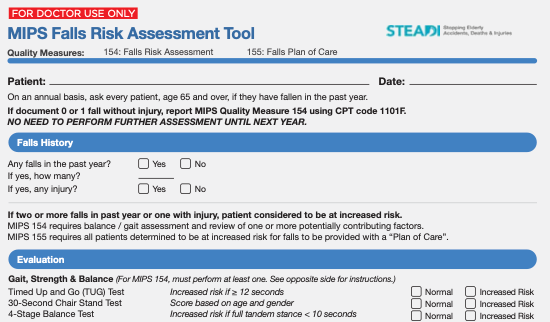
A standardized assessment supports consistent documentation and helps guide the conversation around falls, balance, mobility, footwear, and lower-extremity concerns.
5. Present the Fall Prevention Treatment Plan
For patients identified as high risk, present the three pillars of the Fall Prevention Program:
Balance Brace AFO for added stability and support
Proper footwear to improve fit, traction, and walking confidence
Referral to physical or occupational therapy for balance, strength, gait, mobility, or home-safety training

Use the Fall Prevention Flyer or Infographic to explain how these recommendations work together as part of a coordinated treatment plan.
Make Fall Prevention Part of the Routine
Fall prevention does not need to become a separate or complicated service. By keeping materials available, training staff to recognize warning signs, completing a standardized assessment, and presenting clear treatment options, your practice can help more patients take proactive steps toward safer mobility and greater independence.


Comments